Talk Turkey to Me: An Embroidery Designer’s Honest Review
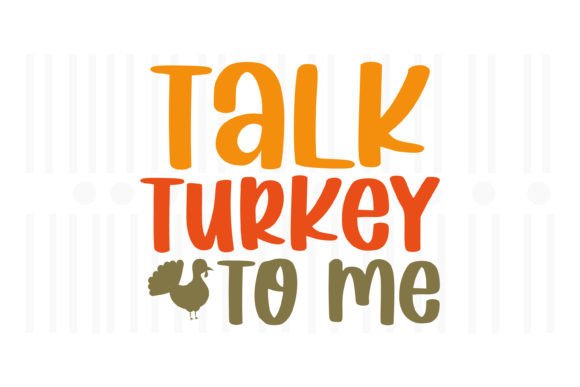
When you open a new design file and start imagining it stitched out, the first thing you notice is the mood it carries. Talk Turkey to Me,Thanksgiving SVG has that immediate, unmistakable warmth of the holiday season—a playful wink that lands somewhere between a vintage greeting card and a modern farmhouse chalkboard. The name alone sets a lighthearted tone, and the visual personality follows through: friendly, slightly cheeky, and built for projects that need to feel personal without being fussy. As an embroidery designer who has tested hundreds of digital files for everything from custom apparel to handmade gifts, I can tell you this one has a clear sense of where it belongs.
The layout is straightforward and uncluttered, which is exactly what I look for when I plan a real embroidery project. The lettering has enough presence to stand on its own, but the overall shape stays compact enough to fit comfortably on a sweatshirt chest, a tote bag front, or an apron panel. The theme is squarely centered on Thanksgiving, but the tone is evergreen for fall gatherings—think Friendsgiving tees, family reunion gifts, or even a playful addition to a seasonal mug or pillow cover. It doesn’t try to do too much, and that restraint is a strength when you are about to commit thread and stabilizer to fabric.
First Impressions: Shape, Detail, and Visual Personality
Looking at Talk Turkey to Me,Thanksgiving SVG as a graphics file intended for embroidery conversion, I immediately notice how the weight of the lettering and any accompanying graphic elements (likely a turkey silhouette or feather motif given the name) strike a balance between bold and readable. The design feels like something you would see on a boutique market shelf or a curated Etsy shop—not too cutesy, not too minimal. It lands in the sweet spot where a buyer says, “That’s exactly what I want for my holiday brunch.”
The detail level is moderate. There are no ultra-fine hairlines or tiny serifs that would vanish in a 4-inch hoop. The shapes are clear enough that a fill stitch or satin stitch can define the outlines without needing excessive underlay. This matters more than most hobbyists realize: a design that looks crisp on screen can turn into a messy blob if the stitch density or gap tolerances are off. Based on the file format—EPS and SVG at 300 dpi—this is a vector-based asset, which means scaling it up or down for different hoops and product sizes is safe as long as you test the stitchout at your target size.
For an embroidery designer, the “100% Color Changeable” promise in the product description is a real practical advantage. It means you can adapt the palette to match your customer’s brand colors, a specific fabric shade, or your own shop aesthetic. If you are an Etsy seller creating a line of custom Thanksgiving gifts, being able to offer the same design in burgundy, gold, olive, or black thread without redrawing the file saves hours and keeps your listings consistent.
Real Case: Custom Embroidered Tote Bags for a Holiday Market
Let me walk you through how I would use Talk Turkey to Me,Thanksgiving SVG in an actual project. A client recently asked for a run of 50 tote bags for a Thanksgiving pop-up market. She wanted something that felt personal but not overly seasonal—something people would carry beyond November. I pulled this design into my embroidery software, adjusted the size to fit a 5x7 hoop (the sweet spot for a standard tote front), and chose a rust-orange thread for the main lettering with a dark brown outline to give it depth on the natural cotton fabric.
The stitchout was clean. Because the design relies on clear, bold shapes, the fill stitch laid down evenly without puckering, even on medium-weight canvas. I used a tear-away stabilizer and a 75/11 sharp needle, and the result had that handcrafted look that boutique shoppers love—not too perfect, but professional enough to sell at $28 a bag. The client sold out in two days. The repeat customers specifically mentioned the “fun, not fussy” feel of the embroidery. That is exactly the kind of feedback that tells me this design works in the real world.
If I were producing these for my own small shop, I would also test a version on a dark fabric—maybe a charcoal twill—with a bright gold or white thread. The SVG source file makes that kind of color swap effortless, and the design’s bold silhouette holds up well against dark backgrounds. That versatility is gold when you are managing inventory for multiple product lines.
Where This Design Shines: Best Product Types for Stitchout
- Custom apparel: Sweatshirts, t-shirts, and hoodies are the most obvious home. The design’s friendly tone works for unisex fits and all ages.
- Tote bags and aprons: The compact layout fits perfectly on a front panel. It adds a handmade touch that feels intentional, not slapped on.
- Pillow covers and tea towels: For home décor, this design reads as a festive accent. I would use a satin stitch for the lettering and a light fill for any turkey motif to keep the fabric from getting stiff.
- Embroidered patches: If you sell patch sets or iron-on designs, this file converts well to a patch format. Just remember to add a merrow edge border in your software.
- Baby and kids items: The playful tone suits a little one’s holiday outfit. I would size it down to a 4x4 hoop and use a soft thread palette.
- Personalized gifts: Adding a monogram or a small name below the main design turns it into a custom keepsake. The design’s open layout leaves room for that addition.
- Digital product previews: Because the file is 300 dpi and vector-based, you can create printable mockups for your Etsy listings or social media without losing quality.
Where to Use Caution: Fabric, Hoop Size, and Detail Limits
No design is perfect for every scenario, and Talk Turkey to Me,Thanksgiving SVG has a few limits you need to respect. If you plan to stitch it in a small hoop—say, 3x3 inches or smaller—the lettering may become too dense for thin fabrics. The fill stitches can crowd together, creating a stiff patch that pulls on lightweight tees or baby onesies. Always test your target size on scrap fabric first, especially if you are new to the file.
For textured fabrics like linen, heavy knits, or fleece, pay attention to your stabilizer choice. A cut-away stabilizer will help prevent the design from distorting, especially if the lettering has tight curves. On stretchy fabrics like jersey or cotton-spandex blends, I recommend a fusible stabilizer to keep the fabric from tunneling during the stitchout.
Dark fabrics are another area where this design needs a thoughtful approach. Because the file supports 100% color change, you have flexibility, but the original design likely assumes a light or medium background. If you stitch it on black or navy, use a bright thread color and consider adding a white or light underlay to prevent the fabric from showing through. A test stitchout in black and white mockup mode on your software will reveal any gaps or thin spots before you commit thread.
Curved surfaces like caps or baby bonnets require extra care. The design’s layout is relatively straight, so it will need to be digitized with a cap frame in mind. If you are using a flat embroidery file converted from SVG, you may need to adjust the stitch angles and underlay to follow the curve. I would not recommend stitching this design on a cap without first testing it on a practice piece.
Practical Designer Notes Before You Stitch
- Test on scrap fabric first: Run a sample on the exact fabric you plan to use. Check for puckering, thread breaks, and density issues.
- Review thread color contrast: Use the color change capability to preview at least three palettes. A high-contrast combination (e.g., dark thread on light fabric) will give the sharpest result.
- Check stitch density: If your software shows any areas exceeding 5 stitches per square mm, consider reducing the density or splitting the fill into layers.
- Confirm hoop size: The design can be scaled, but scaling up too much may thin out the stitch coverage. I recommend keeping it within a 4x4 to 6x10 hoop range for best results.
- Inspect small details: Zoom in on the SVG file in your digitizing software. If any element is thinner than 1.5 mm wide, consider whether it will stitch cleanly or if you should outline it with a satin stitch.
- Test black and white mockups: Convert the design to grayscale in your software. If any parts disappear or blend together, adjust the contrast or separate the elements.
- Compare light and dark backgrounds: Stitch out the design on both a white fabric and a dark fabric. Note how the thread color and underlay affect the final look.
- Use proper stabilizer: For most projects, a medium-weight tear-away or cut-away stabilizer works. For stretchy fabrics, add a fusible layer.
- Confirm licensing: The product description does not specify commercial use terms. Before selling finished items or digital products, check the license agreement from the seller. If it is not stated, contact the seller directly or assume personal use only until confirmed.
How the Design Affects Product Value and Customer Trust
When you present a finished product to a customer—whether at a craft fair, in an Etsy listing, or as a gift—the embroidery is often the first thing they touch. The quality of the stitchout directly influences whether they perceive the item as a handmade treasure or a mass-produced commodity. Talk Turkey to Me,Thanksgiving SVG gives you a head start because its visual personality is already warm and approachable. A clean stitchout on a quality garment or home item reinforces that impression and builds trust in your brand.
For small shop owners and Etsy sellers, consistency is everything. If you can produce the same design in multiple colorways on different product types—tote bags, sweatshirts, pillows, aprons—your shop looks cohesive and professional. The vector source file makes that repeatable. You are not redrawing or re-digitizing each time; you are simply changing the thread palette and hoop size. That efficiency lets you focus on production, customer service, and marketing instead of wrestling with file formats.
The design also lends itself well to bundling. Pair it with a matching mug or a set of tea towels for a gift set. The playful tone appeals to buyers who want something unique but not overly sentimental. For craft business owners, that is a profitable niche: products that feel personal enough for a specific holiday but general enough to sell beyond that one weekend.
Final Thoughts Before You Download and Stitch
Talk Turkey to Me,Thanksgiving SVG is a solid choice for anyone who needs a versatile, good-humored Thanksgiving design that works across multiple product categories. As a graphics file in the Crafts and Graphics space, it delivers exactly what it promises: a printable, color-changeable vector that can be adapted for embroidery, screen printing, or digital mockups. The real test, as always, is in the stitchout. Take the time to test your size, fabric, and thread palette, and you will end up with a finished product that feels intentional, sellable, and genuinely handmade.
Whether you are stitching a batch of tote bags for a holiday market, personalizing gifts for family, or building an Etsy collection that stands out, this design gives you a clean foundation. The humor is gentle, the layout is practical, and the results can be as polished or as rustic as your project demands. That kind of flexibility is rare in a single file, and it is exactly what I look for when I recommend a design to my clients or use it in my own studio.