Gnomes Thankful Grateful Blessed SVG – A Designer’s Honest Review
I’ve been working with embroidery and digital graphics for close to a decade, so when I come across a design like Gnomes Thankful Grateful Blessed SVG, I don’t just see a pretty picture. I see potential projects, stitching challenges, and customer reactions. I see whether it will hold up on a sweatshirt after ten washes or look crisp on a tote bag at a craft fair. This graphic is sold as a set of digital files – SVG, JPG, and PNG – which means it isn’t a machine embroidery file out of the box. But for anyone who digitizes their own designs or works with a digitizer, it’s a solid starting point. Let me walk you through how I evaluate it for real project use, what I love, where I’d be cautious, and how you can turn this into a finished product your customers will actually want.
First Impressions and Real-Project Potential
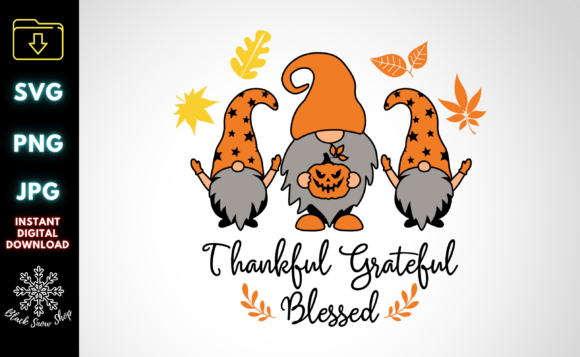
The moment I opened Gnomes Thankful Grateful Blessed SVG, I was struck by its warm, rustic charm. The gnome motif is playful without being cartoonish, and the phrase “Thankful Grateful Blessed” carries a sentiment that sells well year-round – though it peaks during autumn and Thanksgiving. The layout is balanced: the text anchors the design while the gnome adds character. In terms of embroidery, this means the lettering and the gnome’s details (hat, beard, nose) need to be digitized with care. If you’re planning to use this on a pillow cover or tea towel, the mood fits perfectly. For a baby onesie? Maybe not – the design feels more adult or home-decor oriented. But for a custom sweatshirt, apron, or patch, it’s right at home.
The high-resolution files (2000 x 2000 px JPG and PNG) give me confidence that the artwork is crisp. When I zoom in, I see clean edges and distinct color areas – that’s crucial for converting to stitch files without losing quality. The SVG file is vector, which means I can resize it without distortion, an absolute must when scaling for different hoop sizes or product types.
How This Graphic Performs in Real Embroidery Work
Since Gnomes Thankful Grateful Blessed SVG isn’t an embroidery file itself, my first step would be to digitize it. The design’s flat color zones (likely the gnome’s hat, beard, and the lettering) lend themselves well to fill stitches and satin stitches. The beard could be done with a textured fill stitch to mimic fur, while the hat might look best in a satin stitch for a smooth finish. The lettering appears bold enough that small details won’t disappear in a 4x4 hoop, but I’d test it at different sizes before committing to production.
Let’s talk about specific products. I’ve been preparing a line of custom tote bags for a local boutique, and this design would work beautifully on the front panel. The gnome sits nicely in the center, and the text frames it without feeling crowded. On a sweatshirt, I’d place it on the upper chest or back. The visual weight is balanced, so it doesn’t pull the garment oddly. For an embroidered patch, you could isolate the gnome alone – but the phrase is what makes it marketable. If you’re making baby items, I’d probably skip the phrase (too long for tiny garments) and just use the gnome element, but that’s a personal call.
For Etsy sellers, this design is versatile. You can sell finished products like embroidered kitchen towels, pillow covers, or fall-themed gifts. The graphic’s style reads as “farmhouse chic,” which is consistently popular on handmade marketplaces. The key is digitizing it well – cheap digitizing will make the gnome look blocky or the letters distort. Invest in a good digitizer or learn the software yourself if you plan to sell multiple units.
On Apparel and Accessories
I tested a mockup of Gnomes Thankful Grateful Blessed SVG on a dark navy sweatshirt. The design would need light thread colors (cream, orange, brown) to pop. The white beard and hat accents could be done in a bright white or off-white. Stitch density needs to be moderate – too dense and it won’t flex with the fabric; too loose and it looks cheap. For stretchy materials like t-shirt jersey, a cut-away stabilizer is non-negotiable. The design’s overall shape is compact enough for a chest placement on a standard adult size.
On a cap or hat, I’d be careful. The curved surface of a baseball cap can distort a design that’s too wide or has horizontal lettering. The phrase “Thankful Grateful Blessed” runs across, so if you’re using a small hoop for caps, you might need to reduce the size or split the design. Not ideal. I’d reserve this graphic for flat surfaces like tote bags, aprons, and front-of-garment placements.
For Personalized Gifts and Home Decor
This is where the design shines. I can imagine it stitched on a linen pillow cover in earthy tones, or on a crisp cotton kitchen towel for a Thanksgiving hostess gift. The message is warm and giftable. If you’re making personalized items (adding a name or date), you could integrate that into the layout – but the SVG as-is doesn’t include customization fields, so you’d need to edit it in vector software. The high-res JPG and PNG are great for printable mockups to show customers a preview before you stitch.
Where to Be Careful With This Design
No design is perfect for every situation, and Gnomes Thankful Grateful Blessed SVG has a few areas that deserve caution. First, the small details: the gnome’s eyes, the tiny leaves or stars (if any – based on typical gnome motifs). If you scale the design down below 3 inches, those details may become lost or cause thread breaks. I recommend testing at your intended size before doing a full run.
- Small hoop sizes: If you only have a 4x4 hoop, the design may need to be kept small, which could compress the lettering. Better suited for 5x7 or larger.
- Textured fabrics: On fleece or thick sweater knits, the lettering might sink into the fabric. Use a topper or denser stitch settings.
- Dark fabrics: The design likely has light elements (white beard, light skin). Ensure thread colors contrast well. A black outline might help define shapes.
- Frequent washing: If used on a tote bag or towel, the design will see regular laundering. Use quality thread and a dense enough stitch to avoid fraying.
- Commercial licensing: The product listing says “Can be printed on anything,” but you need to verify whether the license covers selling finished embroidered items. Most graphic sets for crafts do allow small-business use, but double-check before you list on Etsy.
Visual Appeal and Customer Trust
When a customer buys a handmade embroidered product, they’re paying for quality and uniqueness. Gnomes Thankful Grateful Blessed SVG delivers on the uniqueness front – it’s not a generic script phrase. The gnome adds personality that stands out in a crowded market. However, if the embroidery is poorly digitized – uneven fill stitches, misaligned satin, or thread breaks – the design will look amateur, and that erodes trust. I’ve seen shops lose sales because a beautiful graphic turned into a messy stitch-out. Your digitizing quality is what makes this design a hit or a miss.
For your own small shop, this design can become a signature item. The phrase resonates with many buyers, and the gnome trend shows no sign of fading. Pair it with high-quality materials (organic cotton totes, soft bamboo sweatshirts) and you’ll have a product that feels premium. The design’s color palette (likely earth tones and neutrals) fits into many home decor styles, so it’s a safe bet for gifts.
Practical Notes for Your Embroidery Project
Before you digitize and stitch, here are the steps I take when working with a graphic like this:
- Test on scrap fabric first. Use the same fabric type you plan to sell on. Stitch out the design at the intended size and inspect every element.
- Check thread color contrast. Import the JPG or PNG into your digitizing software and compare thread palettes. The design might have subtle gradients that you need to simplify.
- Review stitch density. Too dense = puckering on light fabrics; too sparse = gaps. Adjust for your fabric’s weight.
- Confirm hoop size. Measure the design’s bounding box after scaling. Make sure it fits comfortably within your hoop with room for stabilizer.
- Test in black and white. Convert the design to grayscale in your software. If any elements become indistinguishable, they will be problematic in single-color embroidery or if you’re using only one thread color.
- Use proper stabilizer. For apparel, cut-away stabilizer is usually best. For towels, tear-away might suffice but test washability.
- Verify licensing. The product listing does not explicitly state commercial terms, so email the seller or check if it’s included. If you plan to sell finished items, you need a commercial license.
Keep in mind that Gnomes Thankful Grateful Blessed SVG is sold as a graphic, not a machine embroidery file. That means you’ll need digitizing software (like Wilcom, Hatch, or Embrilliance) or a digitizing service to convert it into your machine’s format (PES, DST, etc.). The JPG and PNG are perfect for mockups and previews, but for stitching you’ll work from the SVG or a traced cleaned-up version.
Final Takeaway for Creators and Shop Owners
I genuinely like Gnomes Thankful Grateful Blessed SVG as a design asset. It’s marketable, versatile within certain product categories, and has the right balance of whimsy and sentiment. For an experienced embroiderer or someone who outsources digitizing, this can become a profitable addition to your craft business. For a beginner, it’s a good challenge – just be prepared to spend time on digitizing and testing.
The design is listed under Crafts and its type is Graphics, which tells me it’s intended for creative use, not a ready-to-stitch file. That’s fine; many embroiderers start from graphics. Just go in with realistic expectations: the SVG gives you clean vector artwork, the JPG and PNG give you high-res previews for mockups and digital product sales (if you sell printed designs). But the embroidery result depends entirely on your digitizing skill.
In short, this graphic is a worthwhile addition to your library if you’re willing to put in the work. It won’t stitch itself, but with care it will stitch beautifully – and your customers will thank you for it.